
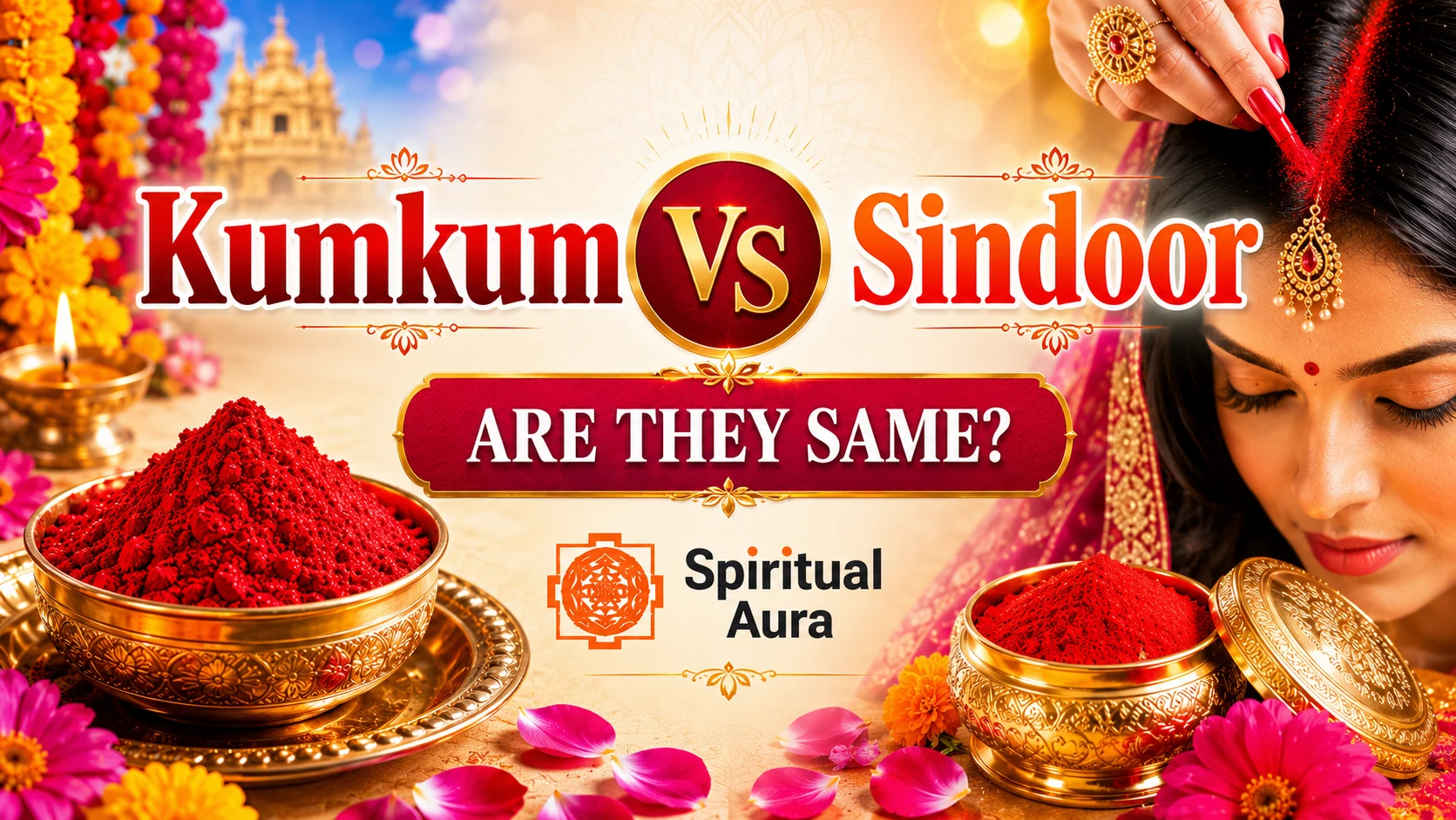
If you’ve ever visited a Hindu temple, attended a wedding, or celebrated a festival, you’ve likely come across kumkum and sindoor. Both are red in colour, both hold religious importance, and both are deeply connected to Hindu traditions. Because they look similar, many people assume they are the same.
However, kumkum and sindoor are not the same. They differ in their purpose, symbolism, ingredients, where they are applied, and who traditionally wears them.
In this article, we’ll explore the difference between kumkum and sindoor, their meanings, traditional uses, and the significance each holds in Hindu culture.
Quick Comparison: Kumkum vs Sindoor
| Feature | Kumkum | Sindoor |
| Purpose | Used for worship, blessings, and forehead tilak | Symbol of marriage for Hindu women |
| Colour | Bright red | Red to orange-red |
| Applied On | Forehead (between eyebrows or as a tilak) | Hair parting (maang) |
| Who Can Wear It? | Men, women, and children | Traditionally worn by married Hindu women |
| Religious Significance | Devotion, spirituality, auspiciousness | Marriage, love, commitment, and husband’s well-being |
| Main Use | Pujas, festivals, temple rituals, daily prayers | Daily symbol of married life and during religious ceremonies |