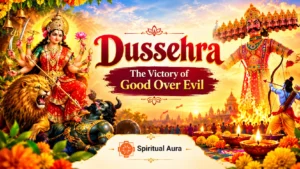
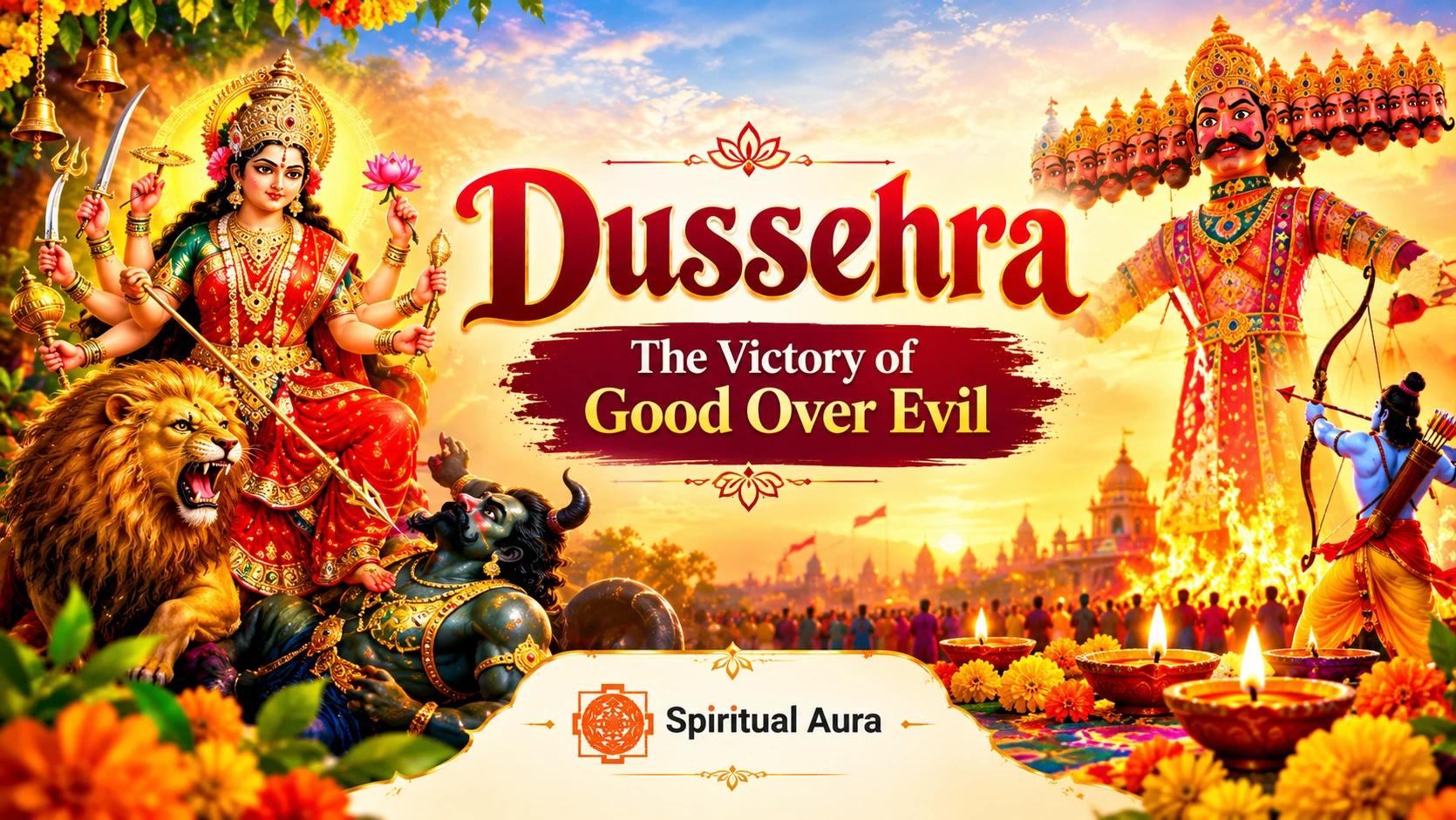
Dussehra, also known as Vijayadashami, is an important Hindu festival that celebrates the victory of good over evil. It is observed with prayers, cultural celebrations, and traditional rituals across India. For many devotees, the festival is a reminder that truth, courage, and righteousness can overcome negativity.
One of the most significant stories associated with Dussehra is Goddess Durga’s victory over the demon Mahishasura. This story represents the power of divine energy and the importance of standing against injustice.
What Is Dussehra and Why Is It Celebrated?
Dussehra is celebrated on the tenth day of Navratri, a festival dedicated to the worship of the Divine Mother in her various forms. The word Vijayadashami combines the ideas of victory and the tenth day.
The festival is associated with two major legends in Hindu tradition:
- Goddess Durga’s victory over Mahishasura, symbolising the triumph of divine power over evil.
- Lord Rama’s victory over Ravana, representing the victory of righteousness over wrongdoing.
The traditions followed during Dussehra vary across India, but the central message remains the same: goodness, courage, and truth are worth upholding.
The Story of Goddess Durga and Mahishasura
According to Hindu mythology, Mahishasura was a powerful demon who received a boon that made him difficult to defeat. Believing himself to be invincible, he began troubling the gods and spreading fear.
The gods realised that they needed a divine force powerful enough to defeat him. According to the legend, their combined energies gave rise to Goddess Durga, who was equipped with divine weapons to restore balance.
Goddess Durga rode a lion or tiger and fought Mahishasura in a fierce battle that continued for several days. Finally, she defeated the demon, ending his reign of terror.
Her victory is celebrated as a symbol of the triumph of good over evil and the power of courage, wisdom, and divine strength.
Why Is Goddess Durga Worshipped During Navratri and Dussehra?
Navratri is a nine-night festival dedicated to Goddess Durga and her various forms. Devotees offer prayers, observe fasting according to their traditions, visit temples, and participate in devotional activities.
The tenth day, Vijayadashami, marks the celebration of victory and the conclusion of Navratri in many traditions.
Goddess Durga is worshipped for her strength, protection, compassion, and ability to overcome destructive forces. Her story reminds devotees that courage and determination are important when facing challenges.
The Spiritual Significance of Dussehra
Beyond the mythological story, Dussehra carries meaningful spiritual lessons that can be applied to everyday life.
1. Good triumphs over evil
Goddess Durga’s victory reminds us to stand against injustice and choose what is right, even when doing so is difficult.
2. Inner strength helps us overcome challenges
Mahishasura can also be understood as a symbol of negative qualities such as pride, anger, and greed. The story encourages us to recognise and overcome these tendencies.
3. Courage and determination matter
Goddess Durga’s battle teaches the importance of remaining strong and committed when facing obstacles.
4. Divine feminine energy represents strength and compassion
Goddess Durga represents Shakti, the divine feminine power associated with creation, protection, and transformation in Hindu traditions.
5. Every ending can bring a new beginning
Vijayadashami is considered an auspicious time for some new beginnings, including education, creative activities, and other important undertakings.
How Is Dussehra Celebrated Across India?
Dussehra celebrations differ according to regional customs and religious traditions.
- West Bengal: The festival concludes Durga Puja, with devotees celebrating Goddess Durga’s victory and bidding farewell to her image.
- North India: Many communities organise Ramlila performances and burn effigies of Ravana to commemorate Lord Rama’s victory.
- Mysuru, Karnataka: Mysuru Dasara is known for its royal traditions, cultural programmes, and grand processions.
- Other regions: Families may visit temples, perform special pujas, prepare traditional foods, and seek blessings for prosperity and success.
These celebrations reflect India’s rich cultural diversity while sharing the common theme of victory over evil.
Dussehra Puja Rituals at Home
Many families observe Dussehra with prayers and traditional rituals. The exact practices vary depending on regional customs and family beliefs.
Common practices include:
- Cleaning and decorating the home and prayer area.
- Offering flowers, fruits, and other traditional offerings to the deity.
- Lighting a diya and offering prayers to Goddess Durga.
- Reading or listening to stories associated with the festival.
- Seeking blessings from elders and spending time with family.
- Beginning new learning activities or important tasks according to family tradition.
Devotees may also visit temples or participate in community celebrations during the festival.
What Can We Learn From Goddess Durga’s Victory?
The story of Goddess Durga offers lessons that remain relevant today. It encourages us to face difficulties with courage, treat others fairly, and work towards positive change.
We can honour the spirit of Dussehra by:
- Practising kindness and patience.
- Controlling anger and avoiding harmful actions.
- Standing up for people who are treated unfairly.
- Developing confidence and inner strength.
- Letting go of negative habits and welcoming better choices.
Celebrating Dussehra becomes more meaningful when these values are reflected in our daily actions.
Frequently Asked Questions About Dussehra
Why do we celebrate Dussehra?
Dussehra celebrates the victory of good over evil. In different Hindu traditions, it commemorates Goddess Durga’s victory over Mahishasura and Lord Rama’s victory over Ravana.
What is the connection between Goddess Durga and Dussehra?
According to Hindu mythology, Goddess Durga defeated Mahishasura after a fierce battle. Her victory is celebrated during Vijayadashami and symbolises the triumph of divine power over evil.
What is the difference between Dussehra and Vijayadashami?
The names are often used interchangeably for the tenth day of the festival. Regional traditions determine which stories and rituals receive the most emphasis.
Why is Dussehra celebrated after Navratri?
Dussehra falls on the tenth day following the nine days and nights of Navratri. It marks the victory associated with the festival and is celebrated with prayers and regional customs.
Conclusion
Dussehra is more than a festival filled with colourful celebrations and traditional rituals. The story of Goddess Durga and Mahishasura reminds us of the importance of courage, wisdom, and standing against evil.
As families worship Goddess Durga and celebrate Vijayadashami, they honour the enduring message that goodness and righteousness should guide our actions.
May the blessings of Goddess Durga bring strength, peace, and positivity to every home.