
Difference Between Kumkum, Sindoor, Punugu, and Aragaja
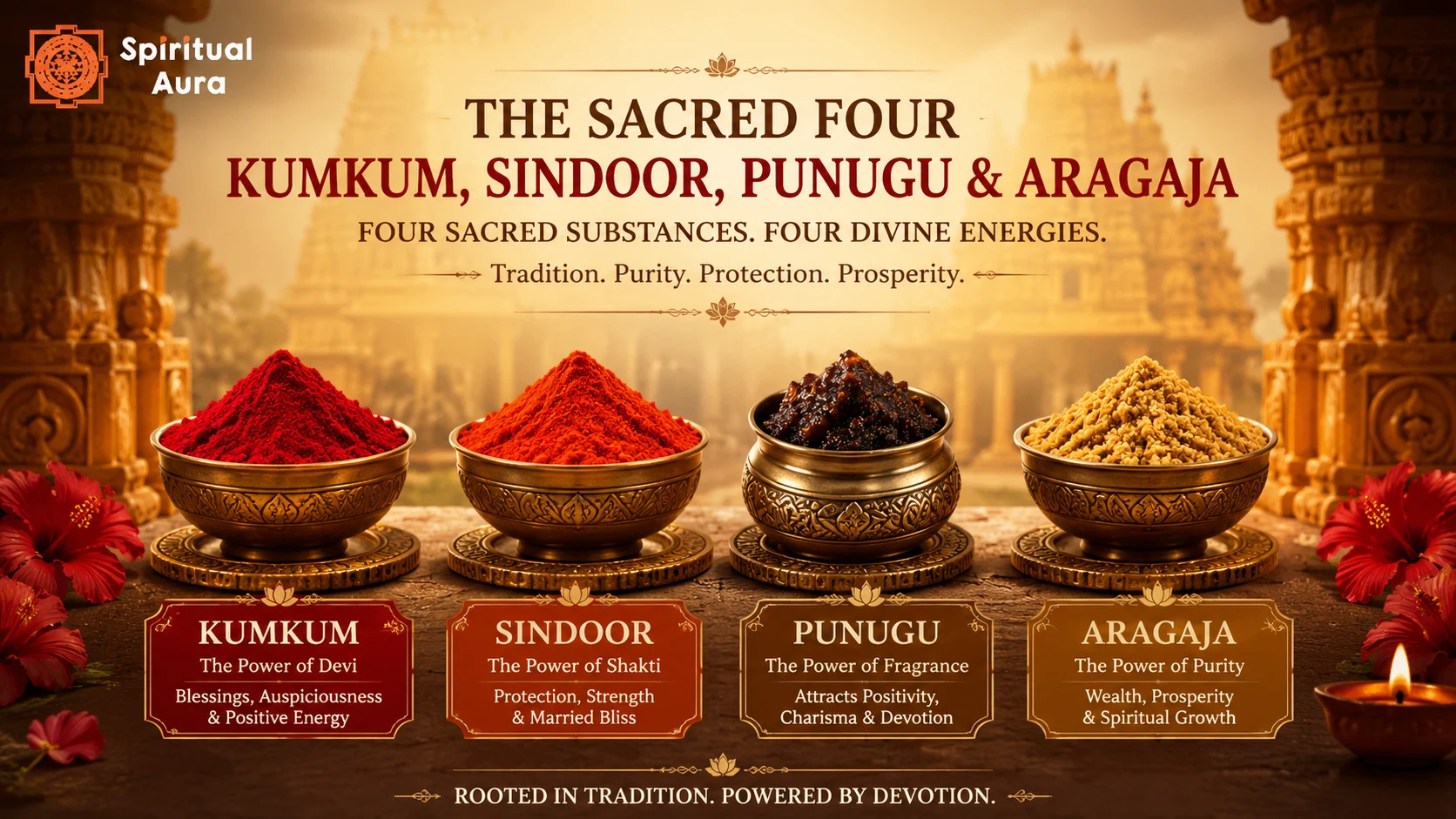
Indian spiritual traditions are rich with sacred materials used in rituals, worship, and temple ceremonies. Among them, Kumkum, Sindoor, Punugu, and Aragaja hold special importance.
While they may appear similar or are sometimes used in related contexts, each has a distinct purpose, origin, and spiritual significance. Understanding these differences helps us appreciate their role in devotion and temple culture.
What is Kumkum?
Kumkum is a bright red sacred powder widely used in Hindu worship and daily rituals. It is commonly applied on the forehead as a symbol of blessing and devotion.
Traditionally, Kumkum is made using turmeric and other natural ingredients, which give it its rich red color.
Uses of Kumkum:
- Applied on the forehead during puja
- Used in temples as a blessing mark
- Offered to deities during worship
- Distributed during festivals and religious gatherings
Kumkum represents auspiciousness, energy, and divine blessings.
What is Sindoor?
Sindoor is a traditional red or orange-red powder mainly associated with married Hindu women. It is applied along the parting of the hair as a cultural and religious symbol.
Sindoor is deeply rooted in Indian marital traditions and is considered highly significant in Hindu culture.
Uses of Sindoor:
- Worn by married women in the hair parting
- Applied during wedding rituals
- Symbol of marital status and commitment
- Used in traditional ceremonies
Sindoor symbolizes marriage, devotion, love, and a long life for the husband according to traditional beliefs.
What is Punugu?
Punugu is a natural aromatic substance derived from civet (a gland secretion traditionally used in temple rituals). It is known for its strong fragrance and is commonly used in South Indian temples.
Punugu is often applied in small quantities during rituals and deity worship.
Uses of Punugu:
- Used as a sacred fragrance in temples
- Applied during abhishekam and puja rituals
- Offered to deities as part of traditional worship
- Used in spiritual ceremonies for aroma and purification
Punugu represents purity, divine fragrance, and sanctity of temple space.
What is Aragaja?
Aragaja is a sacred reddish-brown paste used mainly in temple rituals and deity decoration. It is not used for personal adornment but is strictly associated with religious ceremonies.
Aragaja plays an important role in traditional South Indian temple worship.
Uses of Aragaja:
- Applied on idols during abhishekam
- Used in temple decoration rituals
- Offered during special pujas
- Part of sacred ceremonial practices
Aragaja symbolizes divine presence, purity, and ritual sanctification.
Although Kumkum, Sindoor, Punugu, and Aragaja may appear similar in ritual contexts, each serves a unique purpose. From personal devotion to temple ceremonies, these sacred materials enrich spiritual practices and preserve ancient traditions.
Understanding their differences helps us respect and preserve the cultural and spiritual heritage they represent.